Blog

7 Best Surfaces for Colored Pencil Artists (2023)
8/25/2023 10:51:44 AM | By Holly Bedrosian | Comment on this
Choosing the best paper for your artwork is perhaps even more important than choosing the colored pencil brand (see my post on choosing colored pencils here). The options range from smooth paper all the way to sanded boards, with a variety of colors and price points as well. I will go over my favorite surfaces for professional artists working in colored pencil, and discuss the advantages and disadvantages of each of the different brands:
1. Strathmore 400 Series Bristol Board – Smooth
2. Strathmore 400 Series Bristol Board – Vellum
4. Art Spectrum Colourfix Smooth Pastel Paper – Terra Cotta
6. UART sanded pastel paper – 600 or 800
7. Clairefontaine Pastelmat – White, wine, sienna, sand
When you read about each of these surfaces, think about how you work as an artist as the choice is really a matter of personal preference. Do you start with a precise drawing and “fill in” details with a perfectly sharpened pencil? Do you start with broad shapes and lay colors down quickly, while reserving details to the end? Each of these artistic styles is suited to different types of surfaces.
1. Strathmore 400 Series Bristol Board – Smooth
Strathmore Bristol Smooth is the first surface I tried working on with colored pencil. This acid-free heavy weight paper has a very smooth surface, which is ideal for rendering fine details of portraits and other colored pencil drawings. While this is true, the smooth texture doesn’t allow as much layering and you cannot apply light over dark, so you really need to reserve white spaces for the lightest parts of your drawing.
Also, your initial drawing must be very accurate without any stray marks. I usually draw lightly with graphite and erase any marks in light areas before proceeding to applying colored pencil.
Bristol paper accepts all types of colored pencils, so you can choose your favorite to use. For a list of the best colored pencils for artists, see my previous post.
This is a very economical option, as it comes in a pad of 15 sheets.
Finally, because this is white paper, it may be harder to gauge darks and mid tones than when working on a mid-toned paper.
Here is a drawing I did on Strathmore 400 Series Bristol Board – Smooth:
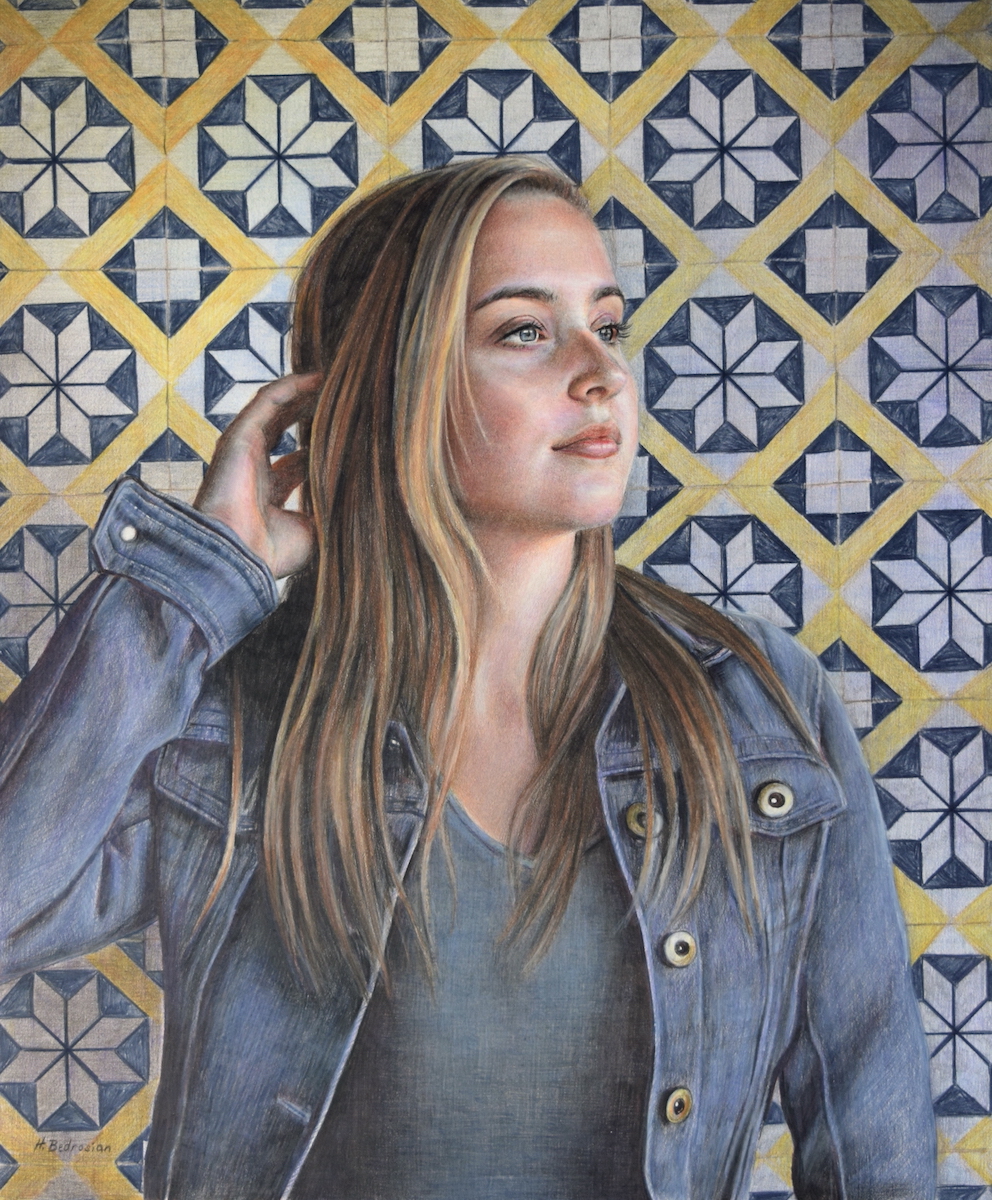
Brooke by Holly Bedrosian
2. Strathmore 400 Series Bristol Board – Vellum
Slightly more toothy than the smooth bristol paper, this vellum surface beautifully accepts layers of colored pencil. While this type of paper may be more amenable to layers of color, you still need to reserve the white of the paper for the lightest areas.
You can still create fine details on this paper despite it’s texture. To allow the surface texture to show through, you can work quickly with a blunt point and graze over the grooves in the paper. If more detail or a smoother look is desired, sharpen the pencil to a very sharp point so you make sure to apply color to the grooves of the paper. Another way to achieve even color application is to “burnish”, or apply the colored pencil with firm pressure.
Priced the the same as the smooth bristol board, this is also an affordable option. In addition, this acid-free paper also accepts a wide variety of colored pencils.
Here is a drawing I did on Strathmore Bristol Vellum:
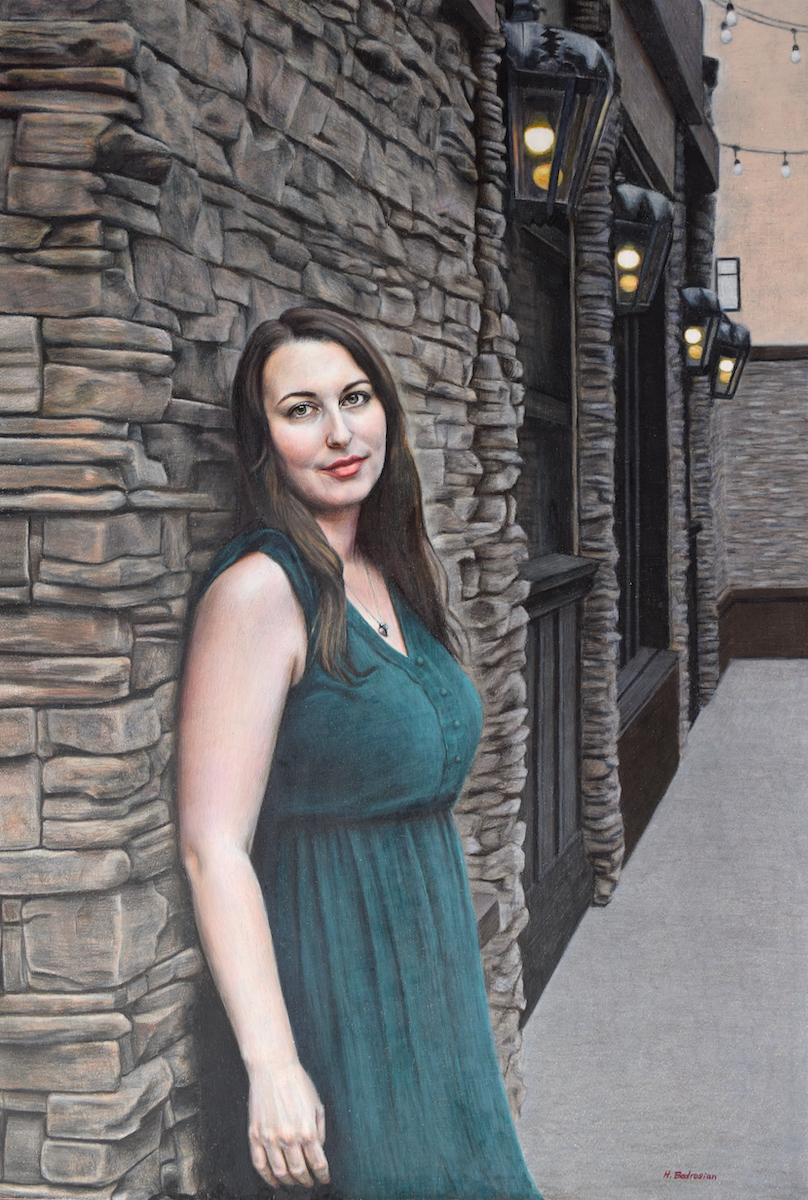
Interlude by Holly Bedrosian
Pastelbord is a durable Acid-free clay and gesso coated Hardbord panel with a marble-dust finish for tooth. Very different from the previous two options, this surface allows for application of lights over darks and you don’t have to reserve white space for light areas as much.
This surface also quickly “eats up” the pencil pigment, so if you like to work quickly, this may be the right paper for you. I prefer to use wax-based pencils as opposed to oil-based pencils on this surface, as the wax seems to adhere better to the surface.
In addition, you can easily apply watercolor pencils underneath (or on top) of your colored pencil drawing as this robust surface will not warp in any way with wet media. I find this technique is a great way to achieve vibrant colors.
Pastelbord is the priciest option on this list, but also the most robust in thickness and durability.
Here is a drawing I did on Pastelbord using Prismacolor Premier colored pencils on white Pastelbord:

Winter Blues by Holly Bedrosian
4. Art Spectrum Colourfix – Terra Cotta
Art Spectrum Colourfix is an acid-free smooth watercolor paper coated with a textured primer. This toothy surface is a good choice for both wet and dry media and can accept multiple layers.
I especially enjoy working on the vibrant terra cotta toned paper and letting the color “peek through” in my drawings.
Colourfix papers are not as inexpensive as the Strathmore bristol boards, but still relatively low in price.
The drawback is that the texture of this paper is very difficult to overcome if you are looking to achieve a smooth, photorealistic finish.
Here is a drawing I did on terra cotta toned Art Spectrium Colourfix:
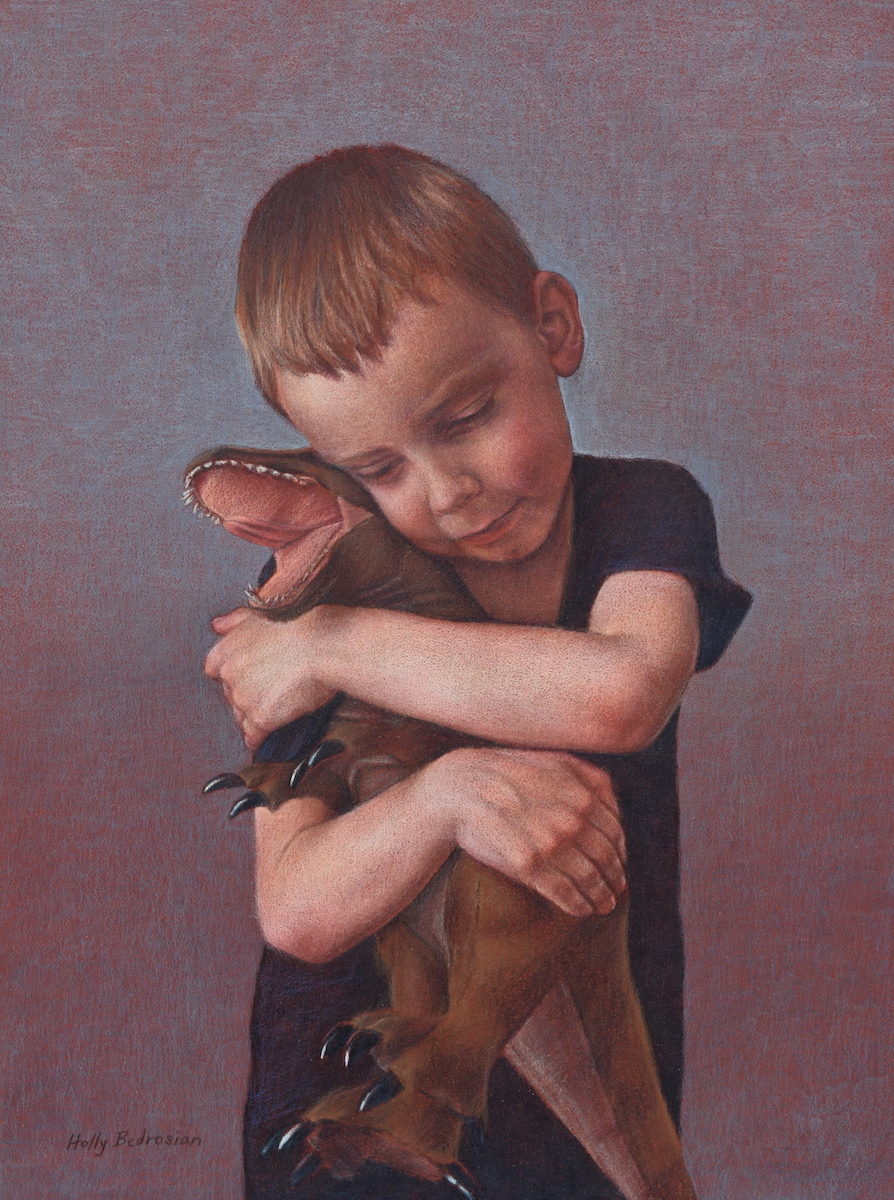
Roar by Holly Bedrosian
Fisher 400 Art paper is a very rough surface not unlike sand paper. However, don’t be deceived by the paper texture – the surface actually grabs so much colored pencil pigment that achieving a smooth effect is quite easy. I also find this paper to be a good option for those who like to lay down color quickly before rendering details.
You can purchase this paper here: https://www.proartpanels.com/fisher400-proart-panels/
This paper makes for easy blending, particularly when used with Faber-Castell Polychromos colored pencils, which act almost as pastel pencils on this surface. You can also use wax-based pencils such as Prismacolor Premier or Caran D’Ache Luminance if you prefer more control (although less blending ability). I will demonstrate the different results you can achieve with this paper in these two examples below:
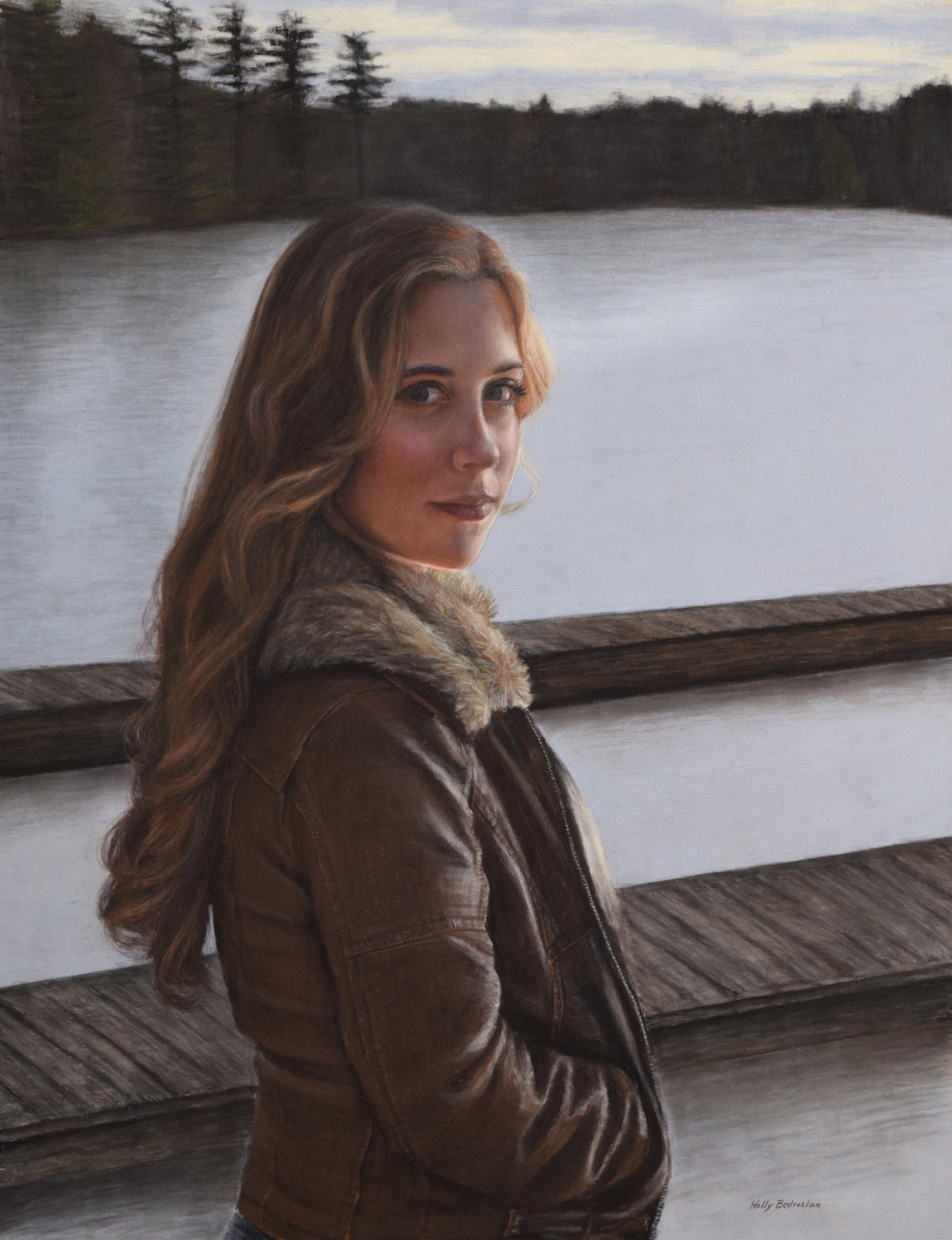
April, Polychromos on Fisher 400, by Holly Bedrosian
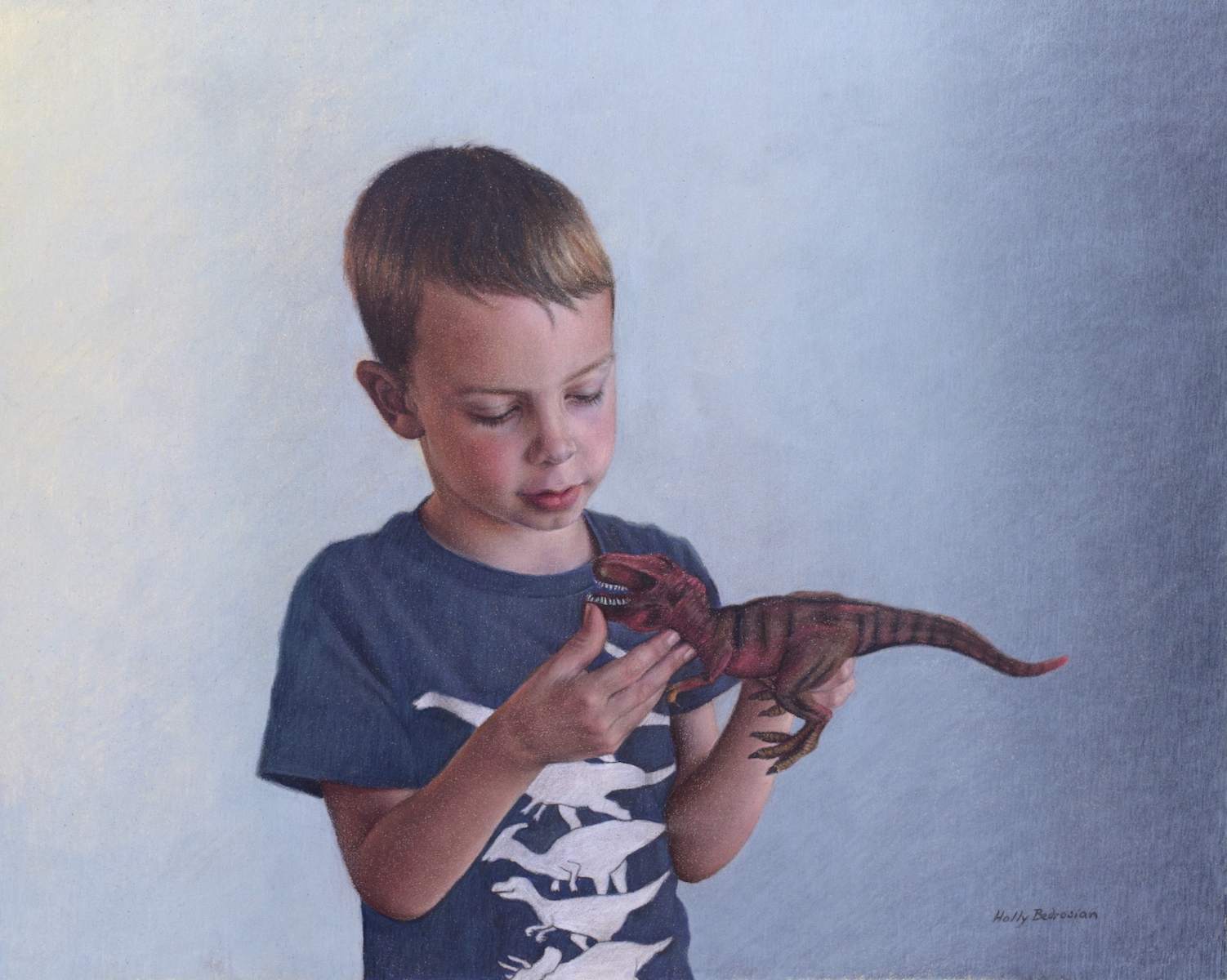
Favorite, Prismacolor on Fisher 400, by Holly Bedrosian
The only con to this paper is that it is very smudgy – you really need to be careful when working not to smear your work as you go. Also, artists who like to do detailed work straight away may not prefer this paper.
Fisher 400 is a mid-priced surface, in-between the price of Colourfix and Pastelbord.
6. UART sanded pastel paper – 600 or 800
UART sanded pastel paper is a favorite amongst pastelists and colored pencil artists alike for its toothy surface and variety of textures. The paper grades (degree of texture) range from 240 with the largest tooth to 800, which has the finest tooth. The paper has a nice weight making it easy to apply several layers of pigment.
UART paper comes in an array of sheet sizes and also mounted boards, and is priced similarly to Colourfix.
I do find the paper texture to have more of a pattern than Fisher 400, so that may be a consideration when deciding on a surface.
Here is an example of a colored pencil piece I did on UART sanded pastel paper 800

Solitude by Holly Bedrosian
7. Clairefontaine Pastelmat – White, wine, sienna, sand
Clairefontaine Pastelmat is another great surface for pastel artists and colored pencil artists. This heavy-weight paper also comes in a wide range of colors. It is priced similarly to Fisher 400.
I find this surface to be somewhere in-between the Fisher 400 and Strathmore Bristol Board – you can layer and blend somewhat easily, but it is not as smudgy as the Fisher 400. Also, you can achieve fine details, but not quite as fine as the Bristol Board. I do like how you can layer lights over darks on this surface as well (again, perhaps not as much as with the Fisher 400). To me, this is an excellent choice if you want a paper with a little bit of everything, or if you are undecided.
I have worked on white Pastelmat before, and also really enjoy working on the wine, sienna, and sand toned papers. Here are examples of my work in each color:

Unspoken Dreams, White Pastelmat, by Holly Bedrosian
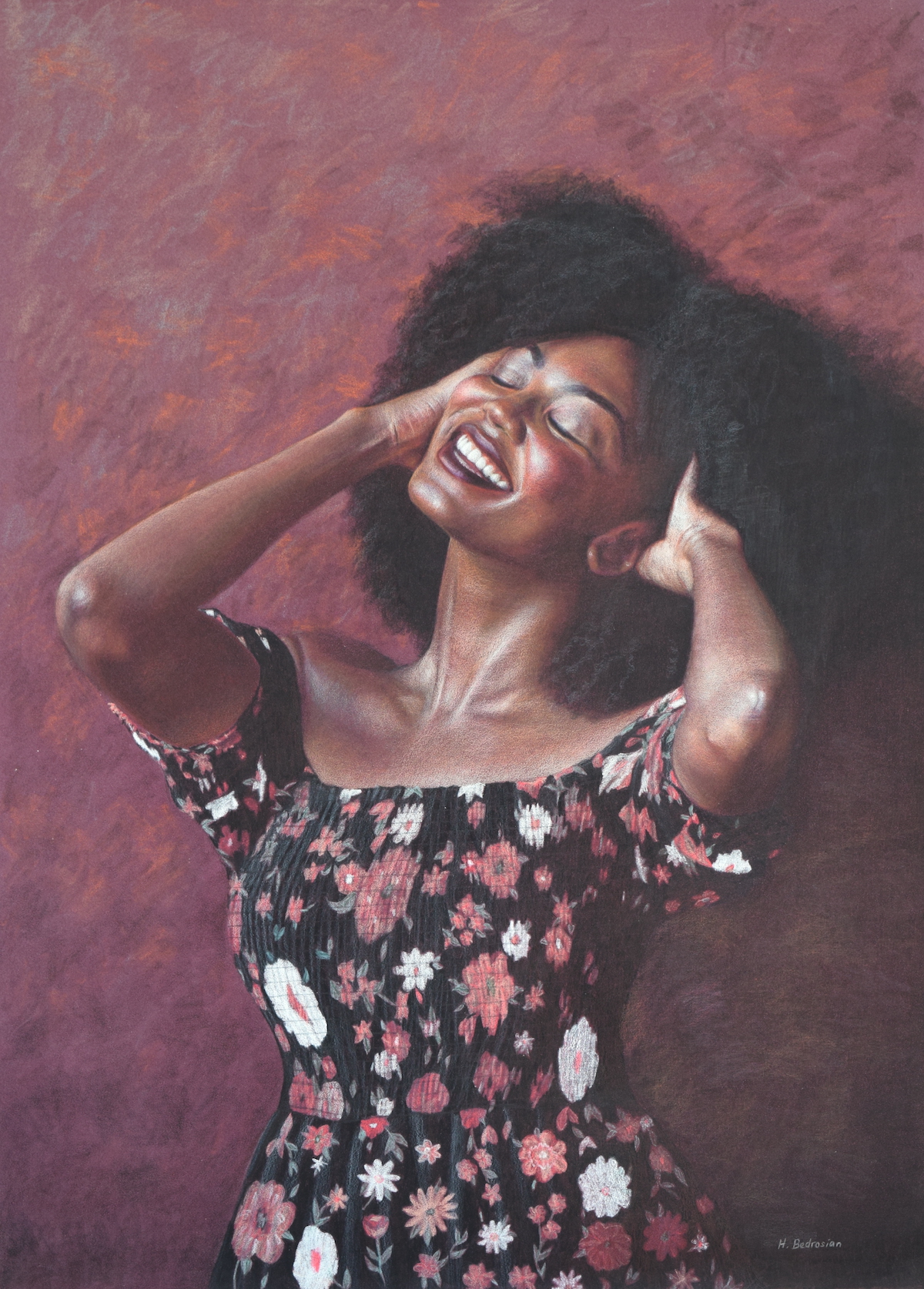
Exuberance, Wine Pastelmat, by Holly Bedrosian
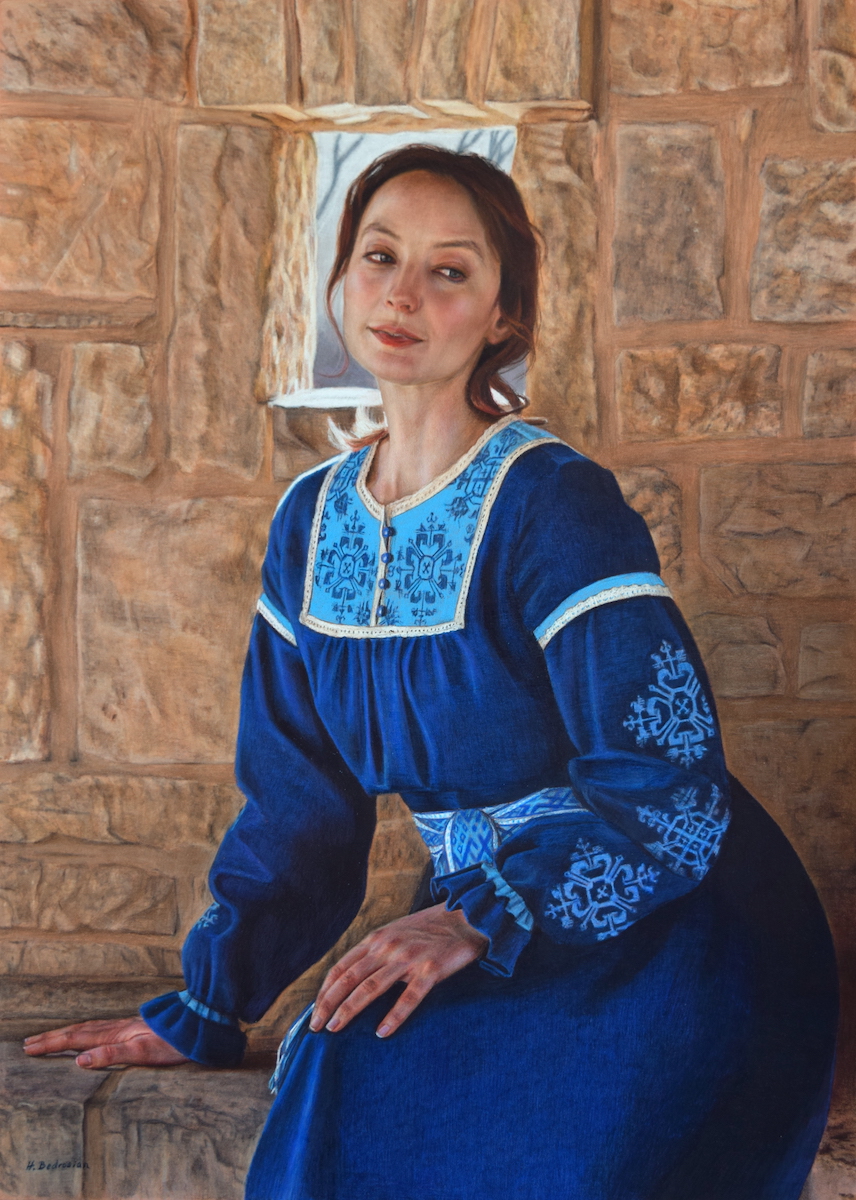
Blue Repose, Sienna Pastelmat, by Holly Bedrosian
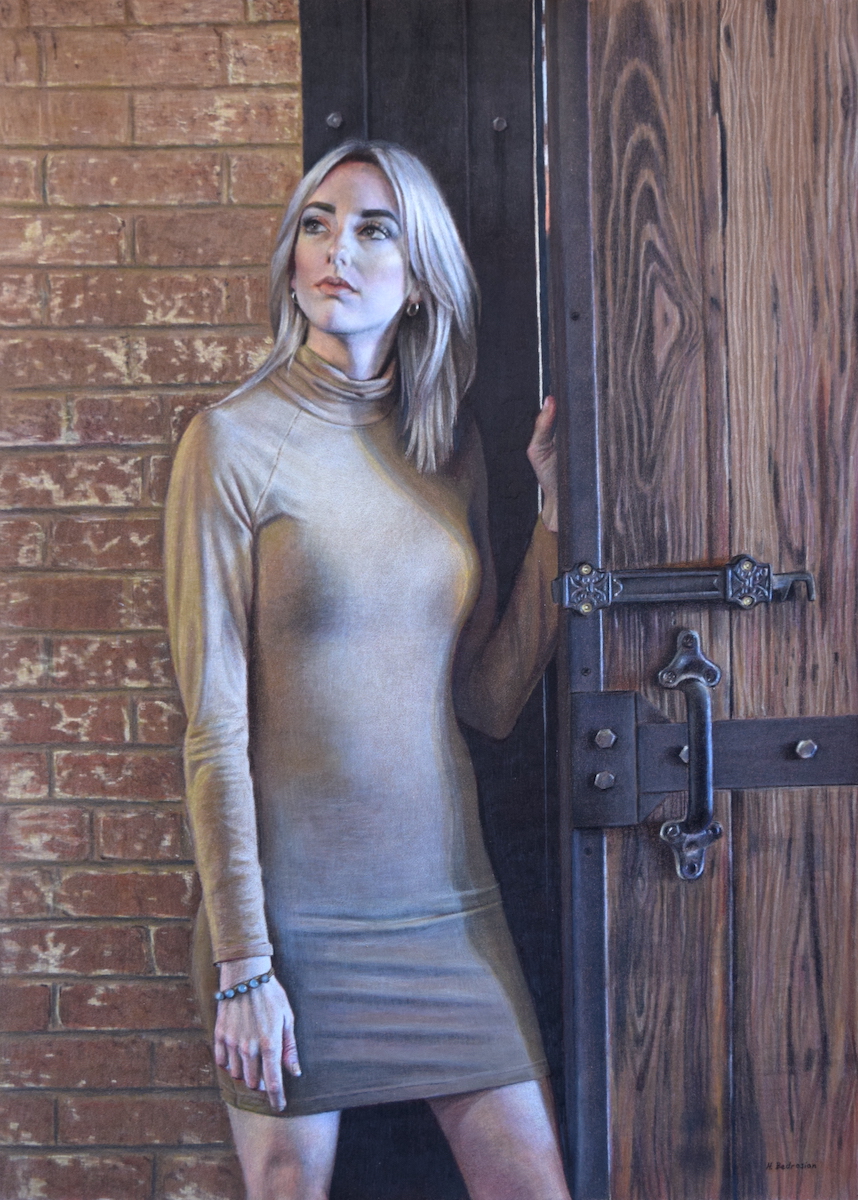
Last Chance, Sand Pastelmat, by Holly Bedrosian
Topics
Archives
Recent Works |
|||

|

|

|

|

|

|

|

|
